
I’m a visiting lecturer in philosophy at the University of Illinois—Chicago, having received my PhD in philosophy in August of 2026 from UIC. I specialize in the philosophy of perception, the philosophy of mind and cognitive science, the philosophy of computing and artificial intelligence, and epistemology. My dissertation is concerned with establishing the belief-independence of some parts of perception, and the ramifications the truth of such a thesis has for the philosophy of mind and epistemology. More generally, a core project of mine is to chart the mind’s architecture in order to explain our peculiarly human form of mindedness.
If you’re interested in getting in touch, you can contact me via:
Institutional email: jspine2@uic.edu
Professional email: JakeSpinellaPhilosophy@gmail.com
Research
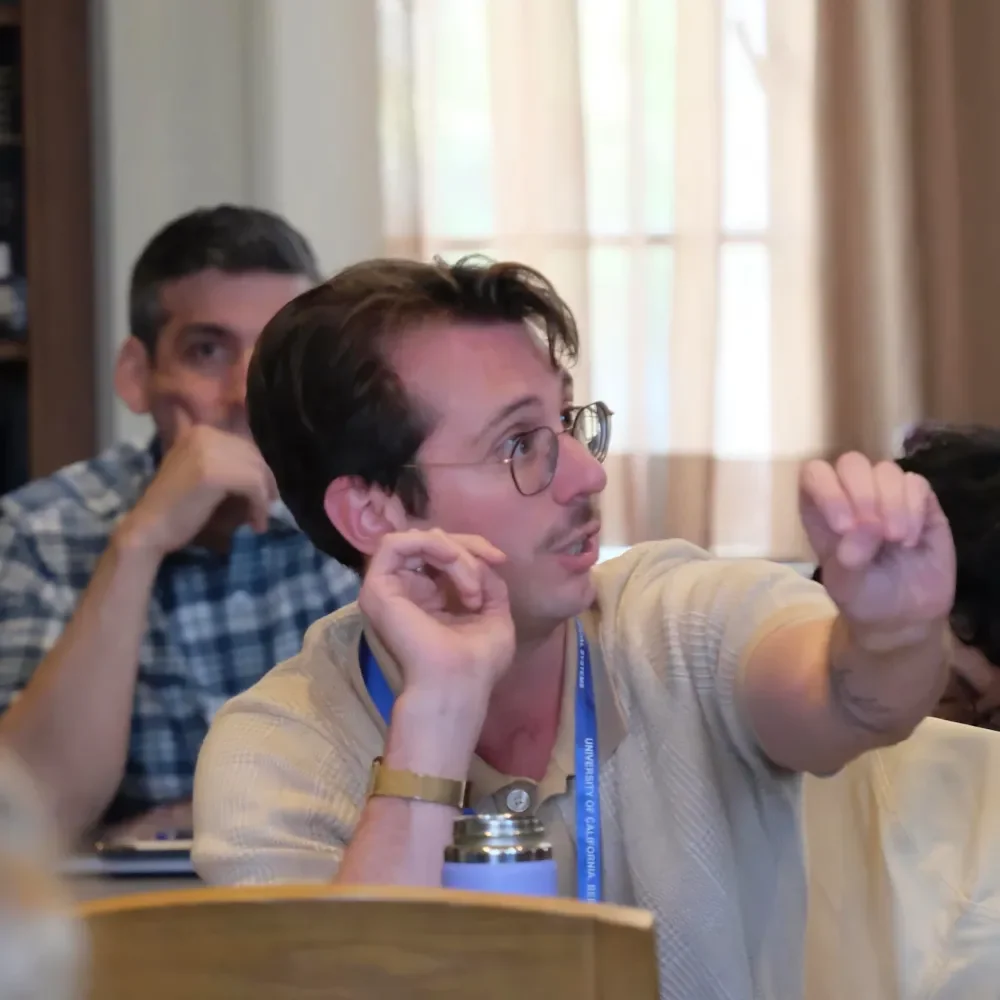
My research concerns the architecture of the mind: the division of the mind into systems that are not merely functionally different but architecturally distinct, in the sense that the resources a system draws on in the course of processing exclude those belonging to other systems. The central case is perception. I argue that perception is architecturally distinct from cognition in virtue of being belief-independent—that is, in virtue of the fact that beliefs, desires, and other cognitive states are dispensable to the explanation of how perceptual processing works. The criterion I use to test this is semantic tracing: a perceptual content is semantically traceable to a cognitive content when the former is derived from the latter by form-sensitive transition rules. Cognitive penetration cases—alleged cases in which what a subject believes shapes what she perceives—threaten belief-independence, because an effect that ran through such rules would make the content of the cognitive state indispensable to explaining the perceptual output. I proceed by showing that the best understood cases—memory color effects, cognitive hijacking and enrichment, feature-based attention, etc.—do not exhibit semantic tracing, and so do not show that cognition figures in perceptual processing in the way that would collapse the distinction.
The constructive half of the project explains why perception should be belief-independent. Belief-independence helps perception do two things at once. It keeps perceptual processing computationally tractable, since it bounds what perception must consult in resolving an underdetermined proximal stimulus, and this is what allows perception to meet the benchmarks of speed and accuracy that its function imposes. And it allows perception to semantically anchor cognition in the world: perception, rather than cognition, fixes what singular representations—representations of particular objects, as against descriptions satisfied by whatever meets their conditions—refer to, by putting the organism in an acquaintance relation to those objects, a relation of direct informational contact that does not run through any description.
A second strand extends this framework to artificial systems. I argue that large language models lack the capacity for singular thought, because they stand in no acquaintance relation to anything their outputs concern, and are therefore at best derivatively intentional—their outputs mean what they do in virtue of our interpretive practices rather than in virtue of the models' own relations to the world. Relatedly, I develop enrichment-sensitivity as a diagnostic for competence attribution: behavioral success on a task underdetermines whether the underlying capacity is the one we care about, and sensitivity to enrichment discriminates the candidates in ways that aggregate benchmark performance cannot.
In epistemology I work on the computational structure of belief. Against fragmentation views, which posit multiple mutually inaccessible belief stores to explain inferential failure, I defend the Costly Inference View: inference has a price, agents pay it selectively, and a single belief store that reasons under cost explains the data without positing multiple stores. The view has downstream applications, including a treatment of the preface paradox that tolerates contradiction without modifying classical logic. I also argue that non-human animals can possess knowledge-wh—knowledge of who, where, or which—without concepts, by grasping the answer to an embedded question through acquaintance and analog magnitude representation rather than through conceptual means. More generally, my epistemological interests connect to my interests in philosophy of mind by articulating empirically informed models of bounded rationality across various domains.
I am also interested in the cognitive science of skill and action. In "Responsibility, Automaticity, and Skill," I argue that responsibility-entailing acts are ones that are directly and synchronically guided by person-level states—states attributable to the agent herself rather than to some subsystem within her—and that various automatic processes count as being so-guided while remaining fully automated.
Selected papers:
"E Pluribus Unum: Costly Inference and Fragmented Belief"—argues that problems of deduction are best explained by appeal to the costs of inference over a unified store, rather than by belief fragmentation.
"Singular Thought and the Intentionality of Large Language Models"—argues LLMs lack singular thought and consequently are only derivatively intentional systems.
"Enrichment-Sensitivity as Competence Diagnostic in Large Language Models"—argues behavioral success underdetermines competence attribution, and offers a heuristic for ascertaining competence from output.
"Animal Knowers: Knowledge-Wh Without Concepts"—argues for non-conceptual knowledge-wh in animals.
"Episodic Memories as Mental Files of Acquaintance Events"—argues that episodic memories are individuated by the acquaintance event that opened the file rather than by content, and that this answers the strongest objections leveled at causal theories of memory.
"Aphantasia and Perceptual Decoupling"—defends a perceptual decoupling account of aphantasia.
Publications
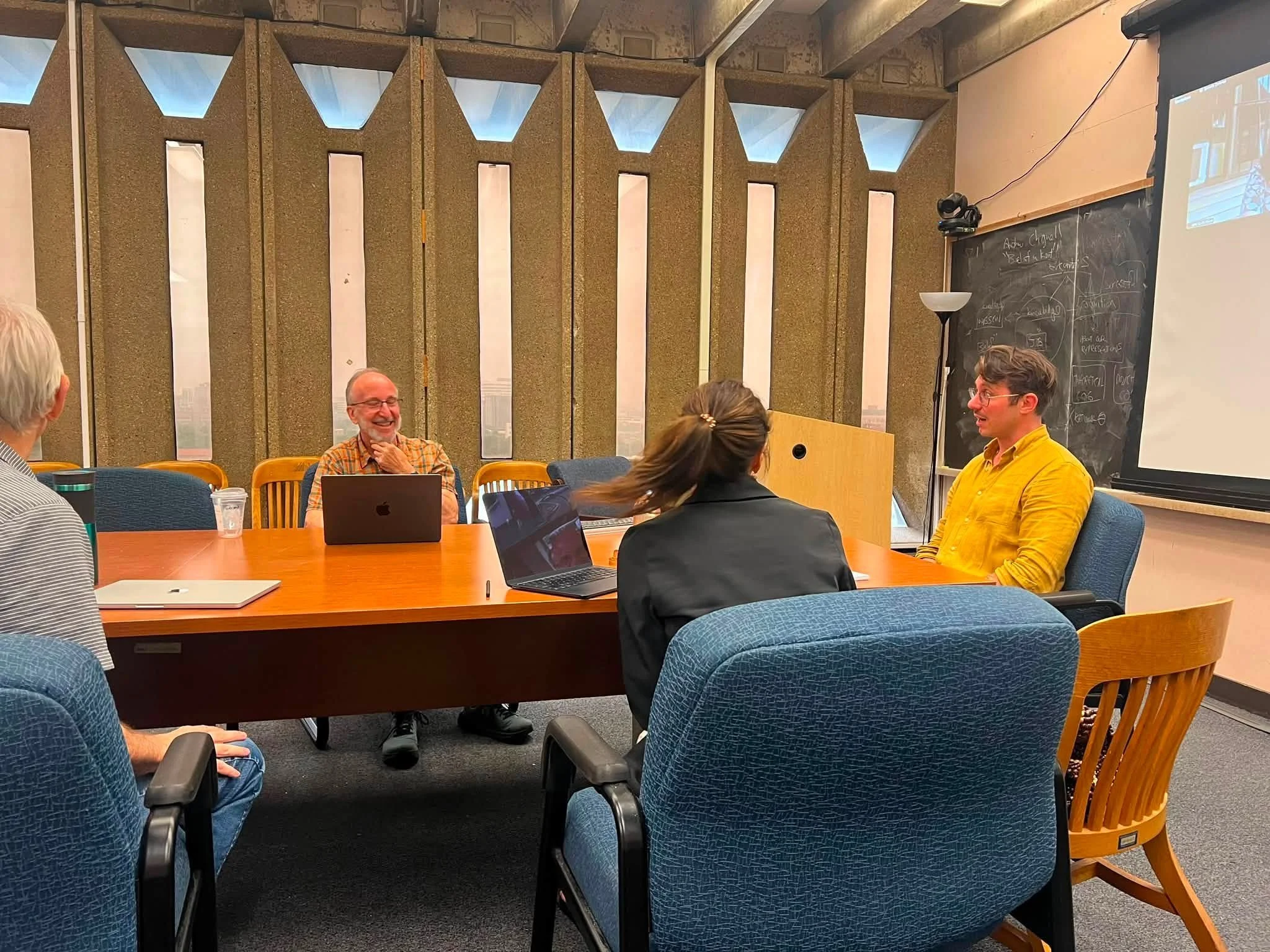
E Pluribus Unum: Costly Inference and Fragmented Belief
Forthcoming, Mind
Literary Indiscernibles, Referential Forgery, and the Possibility of Allographic Art
March 2023, Journal of Aesthetics and Art Criticism
A Century of Misunderstanding? William James’ Emotion Theory
2020, William James Studies
In Review
“Animal Knowers: Knowledge-Wh Without Concepts”
“Aphantasia and Perceptual Decoupling”
“Aphantasic Task Performance is Underdetermined by the Evidence”
“Confabulation, Function, and Malfunction”
“Enrichment-Sensitivity as Competence Diagnostic in Large Language Models”
“Informational Encapsulation and the Computational Tractability of Perception”
“Responsibility, Automaticity, and Skill”
“Singular Thought and the Intentionality of Large Language Models”
In Progress (in varying stages of completion—email for drafts)
“Association Does not Exist”
“Bootstrapping the SELF”
“Costly Inference and a Modified Preface Paradox”
“Episodic Memories are Mental Files of Acquaintance Events”
“Functionalism, Necessity, and Biological Naturalism About Consciousness”
“Homing in on Perceptual Accuracy”
“How to do Things with Propositions: Understanding-Why as Skilled Propositional Performance”
“Individuating the Senses: The Case of Taste and Smell”
“Mental Files and Partial Reference”
“Mental Files Without Frege’s Constraint”
“Perception, Fitness, and Accuracy”
“Poverties of the Stimulus and the Acquisition of Number”
“The Inferential Isolation of Perception”
Teaching
My teaching experience is wide-ranging; courses I have TA’d or solo-taught include:
Critical Thinking (TA, Fall 2017; Primary Instructor, Spring, Fall 2018; Spring 2019)
Death and Dying (Primary Instructor, Summer 2022, Summer 2023, Spring 2026)
Ethics of Computing and Artificial Intelligence (Primary Instructor, Fall 2026; Spring 2027)
Experience the University (First-Semester Liberal Arts and Sciences Course), (Primary Instructor, Fall 2023)
Introduction to Classical Chinese Philosophy (Primary Instructor, Spring 2021)
Introduction to Logic (Primary Instructor, Summer 2021, Fall 2022)
Medical Ethics (TA, Fall 2019; Primary Instructor, Spring 2022)
Metaphysics, (Primary Instructor, Fall 2025)
Philosophy of Computing and Machine Learning, (Primary Instructor, Spring 2027)
Philosophy of Psychology (TA, Fall 2020)
Philosophy of Science (Primary Instructor, Fall 2026; Fall 2023; TA, Spring 2023)
Theory of Knowledge (Primary Instructor, Fall 2021; TA, Fall 2024)
What is Art? (TA, Spring 2020)
CV
Miscellany
When not doing philosophy, I enjoy reading literary fiction and nonfiction; watching films; listening to music and DJing; enjoying food and drink, at home and out; thinking about sports and sports analytics—especially with respect to basketball; playing basketball and billiards; lifting weights; hiking (to the extent that I can in Illinois); playing video games; and trying, quixotically, to beat the bookmakers in sports gambling.